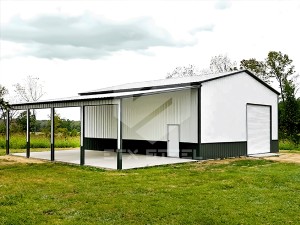
When the garage is already packed, tools are spread across multiple storage areas, or business equipment needs a permanent place to land, a dedicated shop can make life a lot easier.
A metal shop building gives homeowners, landowners, and businesses room to work, store equipment, tackle projects, and stay organized without trying to force everything into a space that was never designed for it.
One of the biggest advantages of a metal shop is flexibility. You can plan the size, access points, covered areas, and overall layout around what you actually intend to do inside.
What Is a Metal Shop Building?
A metal shop is an enclosed steel structure designed primarily around workspace rather than parking alone.
While a metal garage may focus mainly on protecting vehicles, a shop usually includes the extra room needed to work around those vehicles or equipment. That can include space for tools, workbenches, machinery, shelving, materials, parts, and active projects.
Because the building can be customized, a shop can range from a relatively simple backyard workspace to a larger commercial facility with several work areas.
Residential Workshops & Hobby Spaces
You don’t have to own a business to benefit from having a shop.
For homeowners who regularly build, fix, restore, or create, a dedicated metal shop building can keep projects out of the garage, driveway, or house.
Residential shops can provide room for activities such as:
- Woodworking
- Welding and fabrication
- Vehicle restoration
- Motorcycle and ATV projects
- Furniture building
- Crafting and hobby projects
- General property maintenance
You can also add tool storage, workbenches, shelving, and open floor space so unfinished projects don’t have to be packed away every day.
Automotive & Mechanic Shops
Working on vehicles requires more room than simply parking them.
A shop designed for automotive work can provide space around cars and trucks for tools, parts, equipment, and repairs. Taller buildings and larger overhead doors can also accommodate lifted trucks, trailers, and other oversized vehicles.
Depending on how you plan to use the space, your shop could include multiple bays, dedicated parts storage, workbenches, and equipment areas.
For someone who wants parking and workspace in one structure, combining a shop with a custom metal garage can provide both.
Contractor & Construction Shops
Contractors often have more to store than what fits in a work truck.
Trailers, tools, building materials, machinery, and supplies all need a secure, organized place between jobs. A metal shop building can provide a central location for keeping that equipment together while also creating room for maintenance and preparation.
Construction companies, electricians, plumbers, landscapers, and other service businesses can design shops around their particular equipment and day-to-day routines.
You can also add a covered metal carport or lean-to alongside the enclosed shop to provide quick-access shelter for trailers, trucks, or equipment that doesn’t always need to be kept indoors.
Welding & Fabrication Shops
Fabrication work requires open floor space and enough room to move materials between different work areas.
Metal shops can include areas for welding tables, equipment, material storage, project assembly, and finished pieces. Large overhead doors can make it easier to move oversized materials or completed projects into and out of the building.
For a growing fabrication business, designing around workflow from the beginning can prevent machinery, materials, and active projects from competing for the same floor space later.
Farm & Ranch Maintenance Shops
Equipment eventually needs maintenance, and doing that work outdoors isn’t always convenient.
Farmers, ranchers, and rural property owners can use metal shops to service tractors, implements, trailers, ATVs, mowers, and other machinery away from rain and direct sun.
A larger shop can also provide room for parts, tools, lubricants, implements, and other supplies used around the property.
If you need significant equipment storage in addition to workspace, the shop can complement a larger metal barn or metal pole barn elsewhere on the property.
Equipment & Fleet Shops
Businesses that depend on vehicles or machinery need a practical place to keep them ready for work.
Landscaping companies, delivery services, construction crews, agricultural businesses, and other operations can use a metal shop for routine maintenance, equipment storage, repairs, and organization.
Designing enough clearance around your largest trucks, trailers, or machinery is especially important. The goal isn’t simply to get the equipment through the door. There should also be enough room for people to safely work around it once it’s inside.
Combination Shop & Storage Buildings
Not every square foot of a shop needs to be active workspace.
You can dedicate part of the building to shelving, tools, materials, seasonal equipment, inventory, or other storage. Separating these areas can keep stored items from slowly taking over the space you need to work.
You can also combine enclosed storage with open work areas, vehicle bays, or covered exterior sections.
This multi-use layout is one reason custom metal buildings work well for properties with different needs.
Shop & Garage Combinations
For many homeowners, the most useful design is somewhere between a traditional garage and a dedicated workshop.
One section can provide protected parking while another gives you space for workbenches, tools, equipment, and projects. Separating the functions keeps vehicles away from active work areas while still keeping everything under the same roof.
This can be especially useful if your current garage technically has enough room for your vehicles but leaves little space for anything else.
What Should You Consider Before Designing Your Shop?
Before choosing dimensions, think about everything that needs to happen inside the building.
Start with your largest vehicles and equipment. Measure their width, height, and length, then allow extra room to move around them.
You should also consider:
- Workbench placement
- Tool and material storage
- Overhead door dimensions
- Walk-through entrances
- Window placement
- Equipment clearance
- Vehicle maneuvering
- Covered outdoor areas
- Future equipment purchases
- Potential business growth
Planning these details helps prevent a shop that looks large on paper from feeling crowded once you add equipment and workstations.
Leave Yourself Room to Grow
The way you use your property or business may change over time.
You might buy another tractor, add a work truck, take on larger projects, purchase new machinery, or turn a hobby into something more serious.
When planning a metal shop building, think beyond what you own right now. A little additional width, depth, clearance, or expansion space can make the structure much more useful several years down the road.
Build a Shop Around the Work You Do
A good shop shouldn’t force you to work around the building. The building should work around you.
ETX Steel helps homeowners, landowners, and businesses design custom shops around their equipment, available property, storage needs, and everyday projects.
From a residential hobby space to a larger commercial operation, their team can help you think through the dimensions and features that make the building more useful over the long term.
When you’re ready to plan your metal shop building, turn to ETX Steel for experienced guidance and a custom structure designed around what you need to accomplish.